Thaddée Prate
Director of Old Master Paintings and Drawings department at Tajan, Paris
Through this interview series, Old Masters New Generation aims to learn from various experts working in the art world, listen to their stories, and share their perspectives on the future. Read on for a full interview.
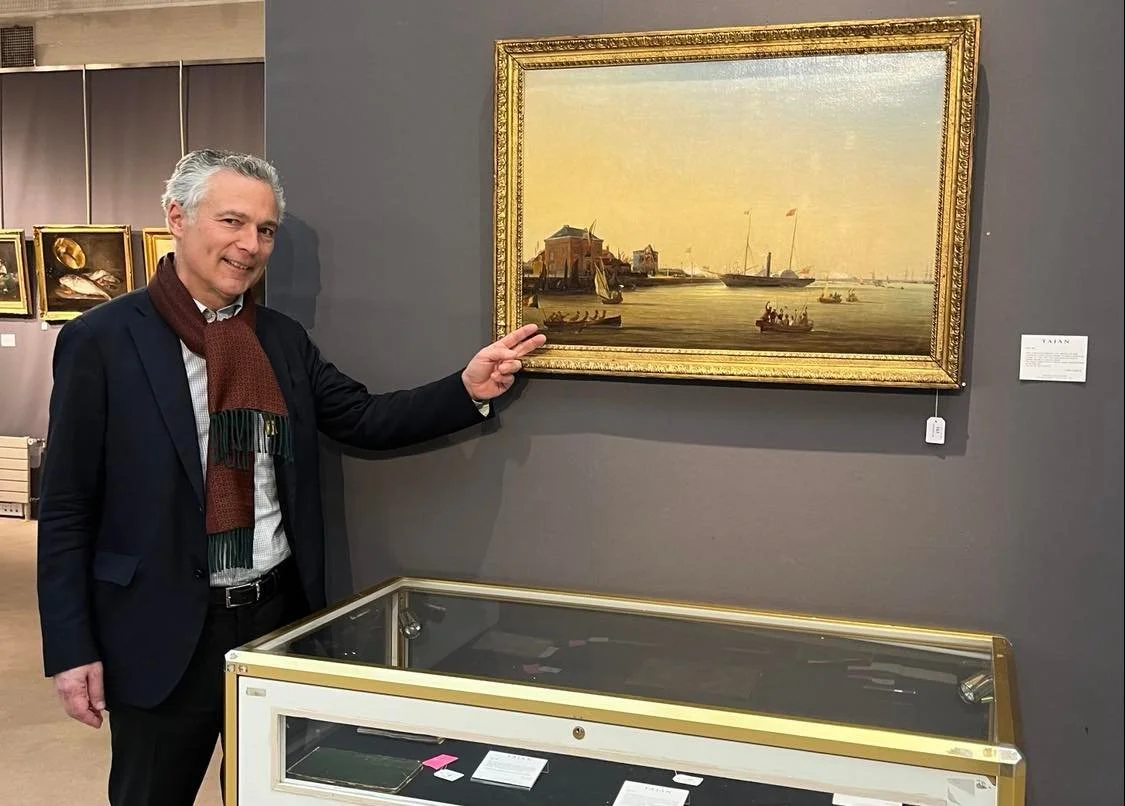
Thaddée at the Tajan exhibition, photo: © Yugy Shon
Tell me about your life at a young age, is there anyone who inspired you to work in the art world?
Yes, when I was a child my family was very interested in works of art, we often went to museums and visited wonderful castles in France, I was very fascinated by art history. My grand parents had a beautiful 18th century atmosphere house in Lille, and one of my great-grandfathers was a passionate collector his whole life.Did any part of your education incorporate the Arts?
I got my bachelor’s in Art History at ICART. Next, I went to Sotheby's in London for 1 year. At that moment, I specialized in Old Master paintings. Is there a mentor who you remember most in your life in the arts?
Of course, my first boss, Bob Halodlt (Halodlt & Co.), whose very known as a dealer for Old Master paintings and drawings especially Dutch and Flemish from the 17th century. I worked with him for 8 years. We were doing the most important fairs at that time such as anciennement Biennale des antiquaires (now La Biennale), TEFAF in Maastricht, and The Armory Show in New York. He was very exigent to buy only top quality works. I learned a lot from him by purchasing and selling paintings. For example, we traveled to buy paintings in Monaco, when Sotheby's and Christie's organized the sales in London, New York and Amsterdam and so on. However, visiting exhibitions and museums with him were great experiences to have an eye on this field. Some people say Old Masters are not in fashion nowadays, do you agree?
You know, when I think about the Old Masters market, it is two parts, first old paintings that I would call “medium quality,” such as explained by "School of", "Follower of", "Circle of", by little masters. These are not in great condition which are also biggest part in the market, indeed, are not very much in fashion because only few collectors tend to buy. On the other hand, there is an important masters market which are much results by all of the world collectors. But you have to pay a lot of money to own this nowadays so entrance into this market is very high. This part is much one that all the auction houses and dealers want to find nowadays. It's difficult if there are less collectors and it sounds like out of fashion. In the past in France, we had more people who were willing to collect Old Masters at different levels but those people doesn’t exist anymore. Now, we should focus on a new generation of collectors all of the world. Which periods of Old Masters are you the most passionate about?
This is absolutely difficult to say... because I am a generalist! But I must say that I am in love with 17th century Spanish school. As well as I studied a lot about 17th century Dutch school, those two countries' the best period are 17th century just what we called the Golden ages. During the 16th century Flanders was an authority of Spain region so there were a lot of interesting relationships between them. I am also interested in 17th-18th century French school, and of course If you like Old Masters, you can't avoid the Italian Renaissance.So you can see that I am not focused on only a few parts, I like very different scenes. My taste are split for various schools, it is amazing whenever I visit city of beautiful Old Masters for instance Madrid, at Prado Museum, you will directly fall in love with the Seville school in the 17th century. Toledo as well. I cried in front of El Greco, (absolutely marvelous!) and if you go to Den Haag, you will see the best painting of the Dutch painting that you can ever see in your life. It is fantastic! You can't ever finish to visit museums and you can like many things at the same time. Link: Museo del Prado collection: Spanish painting up to XVIII century
What about subject and theme?
Personally, I like Baroque methodology 17th century, country landscape that you can find from 18th century, Spanish religious paintings, as I told you, I don't have specific favorite, but what makes me bored is "still lives". That's it. Can we share your secret of training your eyes and/or your taste?
If you want to specialize in Old Masters, you have to go to museums all the time, I never miss an exhibition. Traveling to see the present exhibition is a real key. In Paris, there is Louis-Léopold Boilly's exhibition for the moment at Musée Cognacq-Jay. Now it finished, but the Botticelli exhibition at Musée Jacquemart-André was nice. And there was an exhibition that just finished at Château de Versailles, the King's Animals, which was a great exhibition as they always have done. Last time I was in Madrid, the exhibition at the Prado Museum was great to see the relationship between South American countries and Spain. You have to see many exhibitions, travel everywhere in Europe...When you see a painting, what do you see first?
General impression that it gave, then I immediately see the quality, how did the artist treat the subject and so on. But my first feeling tells sensibility and reaction to the paintings. Historical context also comes next. Understanding subject and story is very important. What is your relationship with Cabinet Turquin? When was the first time you worked with him?
I have known Eric Turquin for a very long time. We met first in London, at the time he was an expert at Sotheby's London, that was long time ago. In 1984. He was creating his own business expert cabinet in Paris, at that moment I was a dealer so we just started to have business together. Because we knew each other well and I believe we can be professional business partner during all this time. Later I joined Tajan auction house, and Eric is the expert of all the paintings we present to collectors at Tajan. 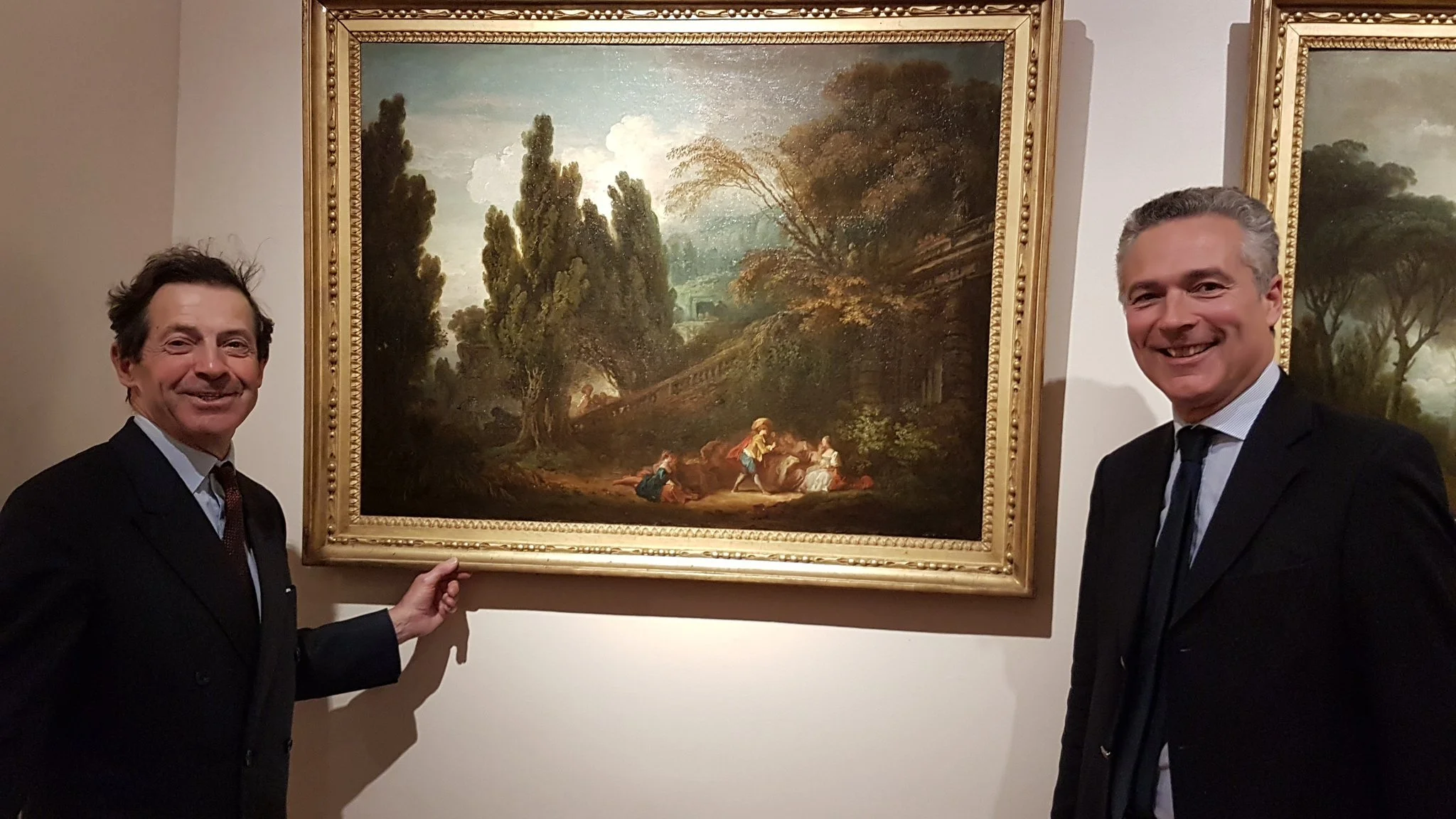
Thaddée Prate and Eric Turquin in front of Fragonard’s painting, photo : © Valérie Sasportas
What is the most important competence to work in the Old Masters area?
You have to be very modest and very prudent. Because paintings can come from nowhere, perhaps you have to be careful when somebody comes in front of you and presents the paintings, it can be something. Europe had small and big events such as Revolution, so that ownership and provenance are very much changed from the history. You can find an important painting coming from a very simple person. I remember when I was at Sotheby's training, there were a painting from Mantegna, The seller wasn't from a well-known precious family at all, and nevertheless he didn't have any idea about that painting. How interesting, now it hangs in the Getty Museum! So, you must have met many impressive clients and collectors I assume?
Each collector has different characteristics and a different way of collecting. I remember a man who bought the house which has a ceiling of paintings by Charles Le Brun's (1619-1690) in Paris, and he wanted to collect only 17th century French painting, Louis XIV period. Also, I met people who only collect "still life", specially a guy who collects only Dutch 17th century still life. There is a collector who is only interested in 19th century drawings. Recently, I met a guy who only collects battle scenes, which is not at all in fashion, he likes to collect within a minimum budget, even thought he is wealthy. Mostly I met a lot of interesting male collectors while I am working for auction house. Do you have the most memorable auction sales in your mind?
There was an incredible sale organized by Jacques Tajan, the collection of Roberto Polo in 1991. A strange young collector, the preview composed of a fantastic group of 18th century painters such as Vigée Le Brun (1755-1842), Chardin (1699-1779) and so on. The auction sale held in the Hotel George V, avenue de Montaigne in Paris, that was very impressive. I think we have catalogue! Of course, I remember Charles de Beistegui's collection at Sotheby's in 1999 too. That was full of objects in the Château de Groussay in Montfort-l'Amaury. Beistegui collections were 5 catalogues including numerous ceramics, sculptures, bronzes, furniture, and paintings by very important artists like Goya. Visiting from room to room was one of the unforgettable memories. And I remember Yves Saint Laurent's auction at Grand Palais, that was great moment likewise. 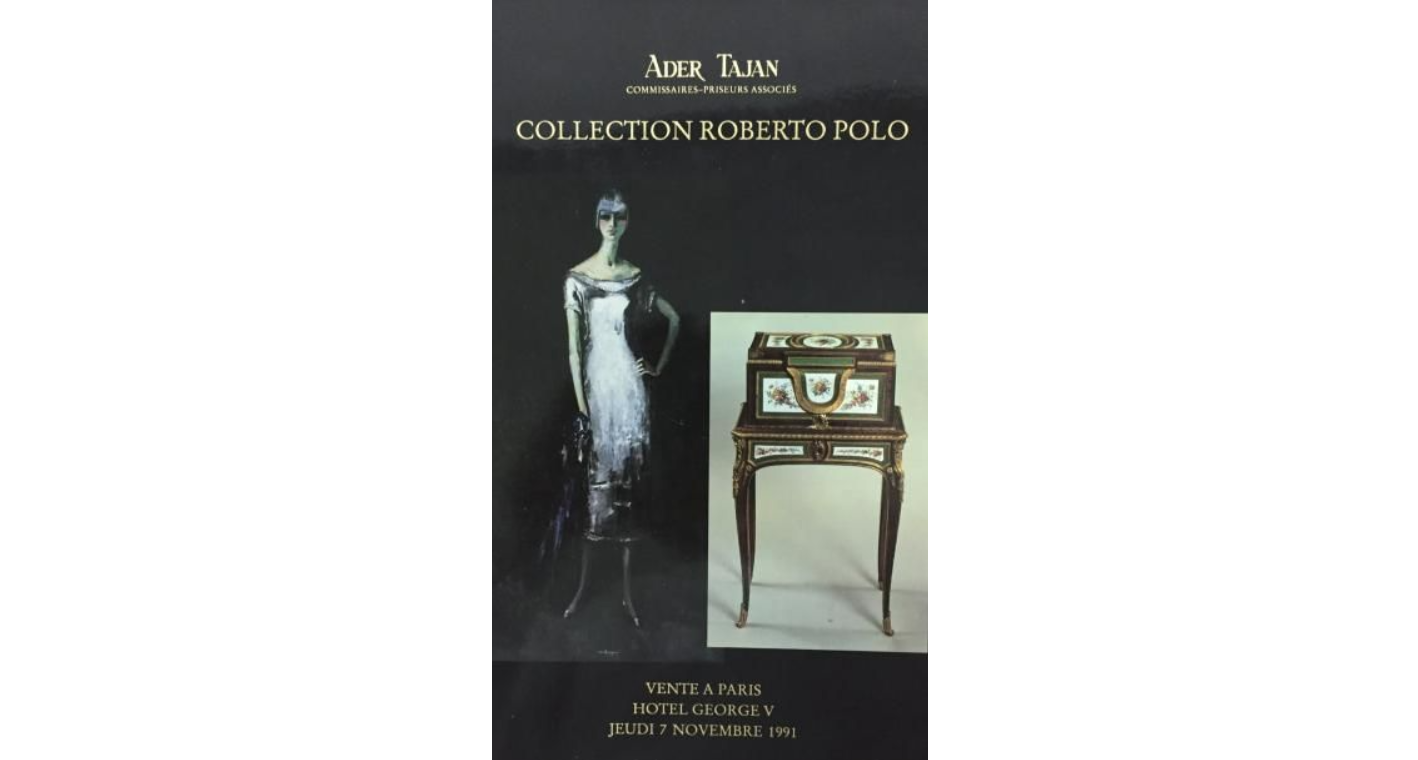
Important Auction of the Collection of Roberto Polo, 7th November, 1991
You’ve been working in the art world for many decades, do you collect anything for yourself? If so, what do you collect?
I am a poor little collector (haha). If I have a good painting, I have to consider my business which I was obliged to sell. So like a general dealer, I only keep my mistakes. But I still like collecting good paintings and surrounding them. Mainly, I collect drawings and paintings. Could you tell us what type of collector you are?
Like the conqueror type, buying arts for the pleasure of owning and just for my satisfaction can be related to me. I am collecting things makes me satisfy. It also helps to enjoy little discovery. Drawings are not worth a lot of money but I buy if there is an interesting one. Unlikely paintings, you can buy some drawings with just few hundred euros. However, 40 years that I am working in this business and I realized I never consider myself to investment way of buying and selling. Could you tell us your first collection and reason why you bought?
Sometime when you are in front of the painting, you know the feeling that you have to buy. You can't resist ignoring the painting. It is a relationship with the object, and that moment you know the painting already caught you. My first collection was a painting. I bought when I was in London at Sotheby's a long time ago. (He seems like discreet collector as well.)Would you buy your collection at a gallery?
It would be very rare, firstly it could be quite expensive and secondly, I believe myself that I can purchase in better condition. But, I bought often with dealers in France. Nowadays this happens less than past years, but buying some great paintings with antique dealers goes well. How often would you collect?
I would say... 2-3 times in a year? I prefer buying less but good things. What kind of combination do you have in your house?
Mostly drawings, few paintings and few sculptures. However, if my family complains "There are too many things in this place" then I move my collection. Otherwise, I almost never change my display.Your collection is private? Or would you be willing to show the public?
It is absolutely private. If my friends come to my house, of course, they will see but I don't tell what, where, how those things came from somewhere.. Any advice for those who have just started to work in the Old Masters field?
If somebody wants to specialize in Old Masters, I would like to say exercise your eyes all the time, going to different exhibitions, fairs everywhere, and try to meet dealers and auctioneers, and knowing people who know the market is important. “Never stop learning. It is a complicating mixture of the field. ”
For the next auction in March, can you tell us the highlights?
It is not a huge auction during the year but we have very interesting drawings, oil on paper and board by Flandrin family. Hippolyte (1809-1864), Paul (1811-1902) and Auguste (1804-1842) Flandrin, originally from Lyon, were among the most important painters on the French art scene in the mid of 19th century. At this auction we sell mostly the 2 brothers the first half of 19th century work. Paul (1811-1902) who worked in Italy with Ingres was country landscape painter, and Hippolyte (1809-1864) was doing more figures, methodological, biblical figures, and received a commission from the chapel of St John in the church of St Séverin in Paris. 40 lots are all coming from the family descent. Some of the pieces were exhibited in Lyon recently, you see this catalogue. And most importantly, you can buy drawings for few hundred euros, which is very exciting! Especially, keep your eyes on lot. 60 Album Amicorum, because it is a combination including small drawings by Ingres (1780-1867).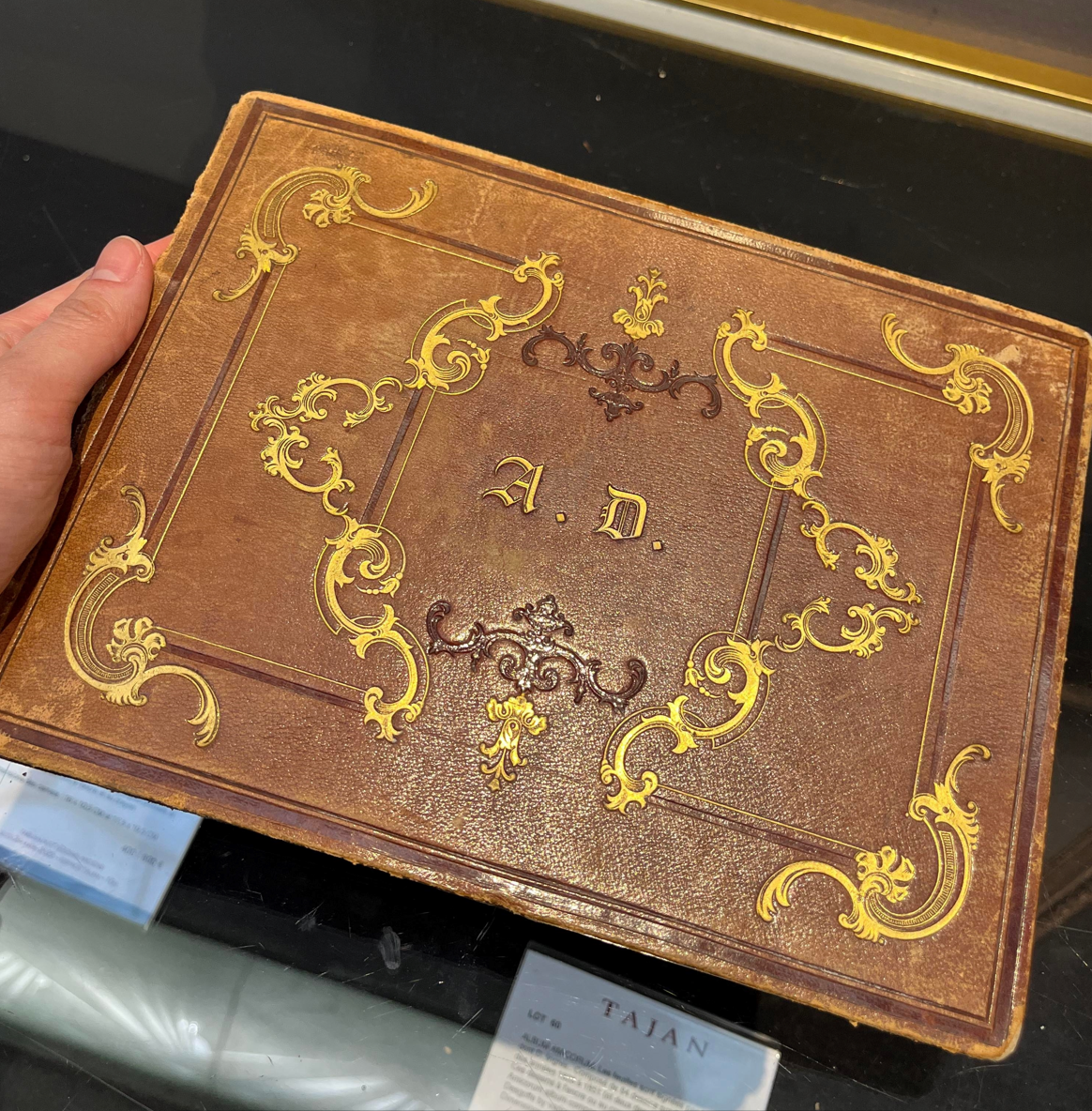
lot. 60 Album Amicorum, estimate 12,000 - 15,000 €, photo: © Yugy Shon
More information: Catalogue - Tajan
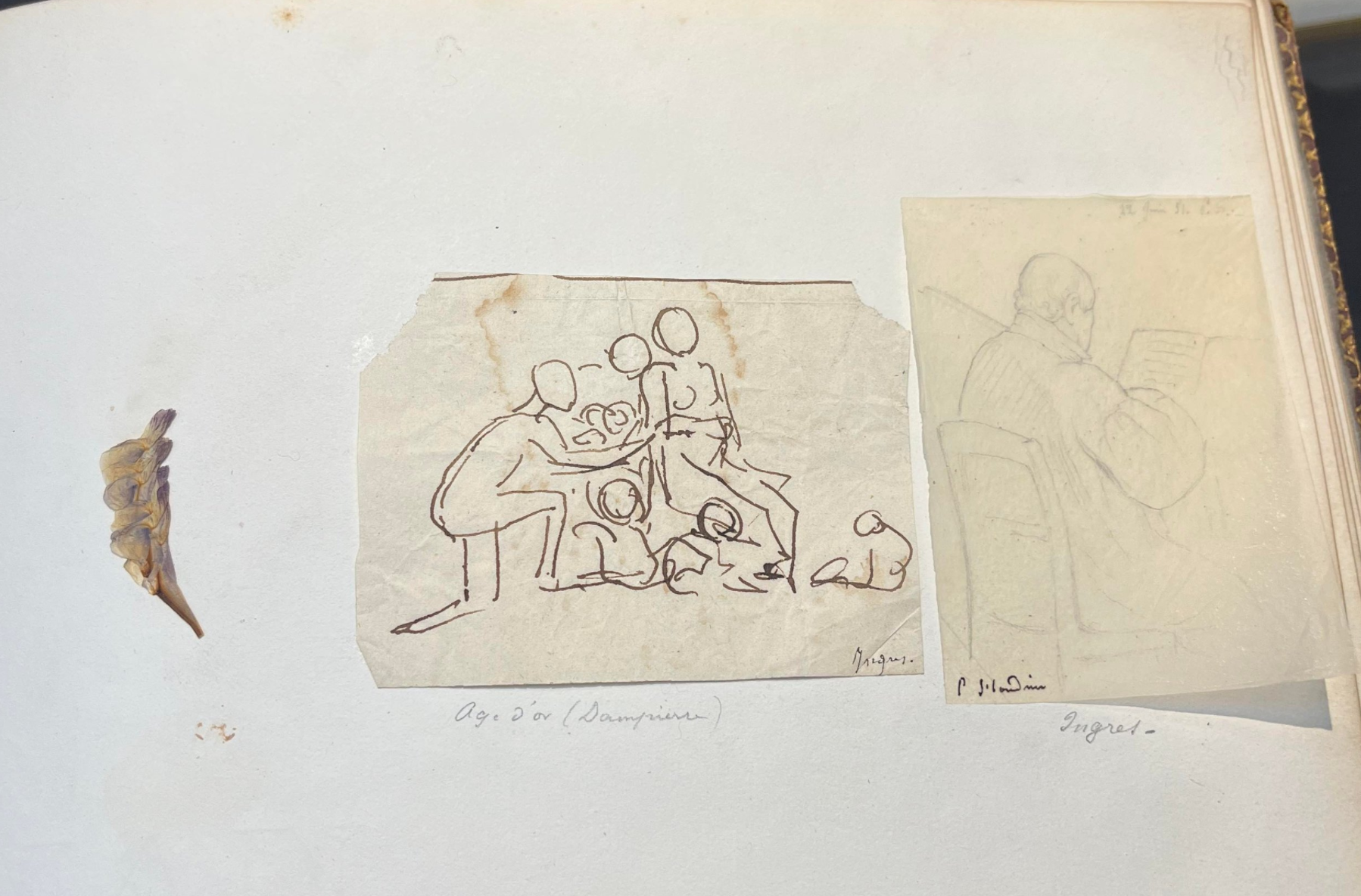
photo: © Yugy Shon
More information: Catalogue - Tajan
Thaddée Prate is the first person who discovered two lost paintings by Jean-Honoré Fragonard(1732-1806) during an inventory of a castle in Normandy in 2017. Appraised by the Cabinet Turquin and then by the Louvre, the paintings have been classified as national treasures. Before few months ago, he discovered a study of the Martyrdom of Saint Sebastian attributed to Leonardo da Vinci(1452-1519).
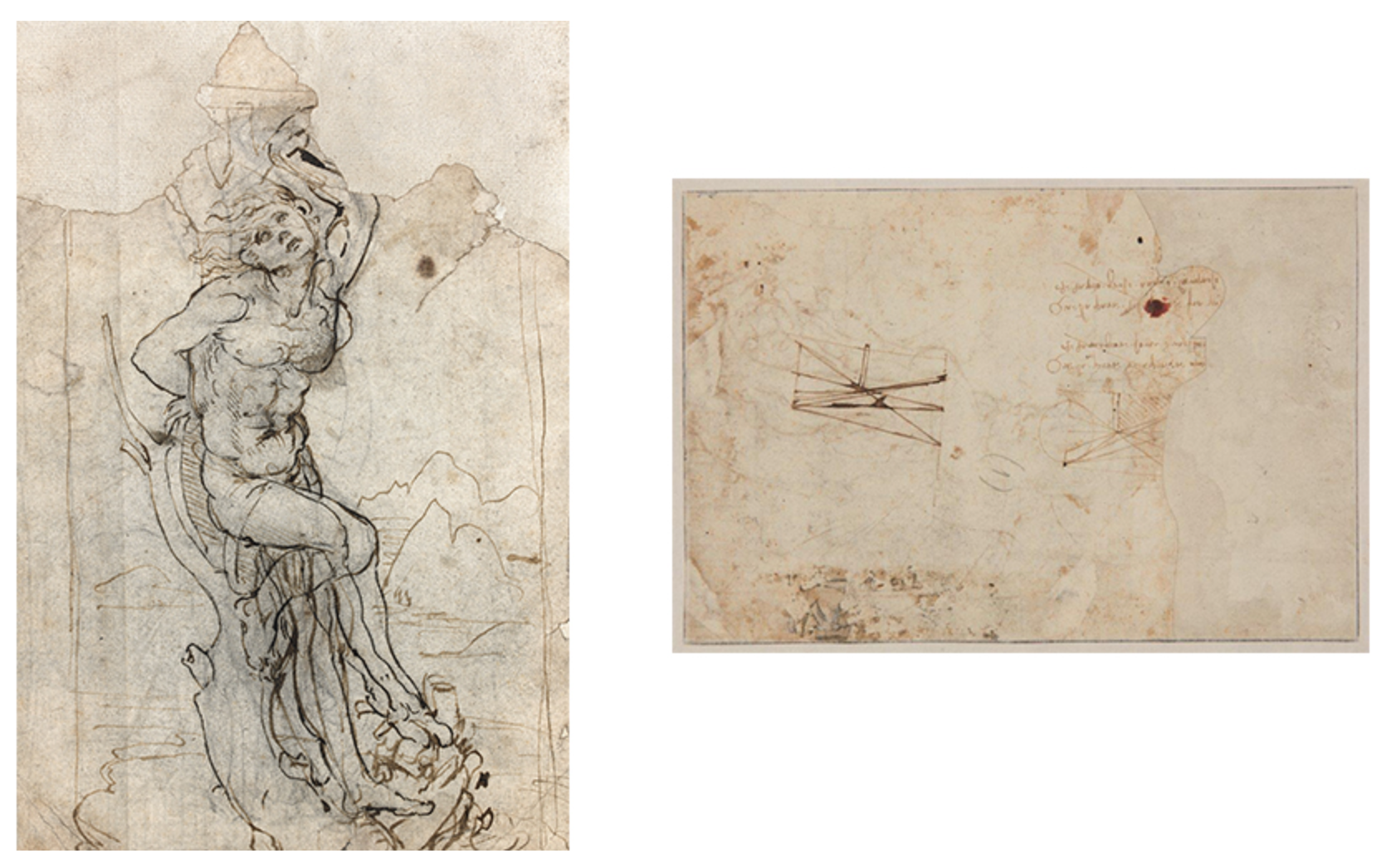
The study for Saint Sebastian, believed to be by Leonardo Da Vinci (1452-1519), photo : © Tajan
More information: Click here
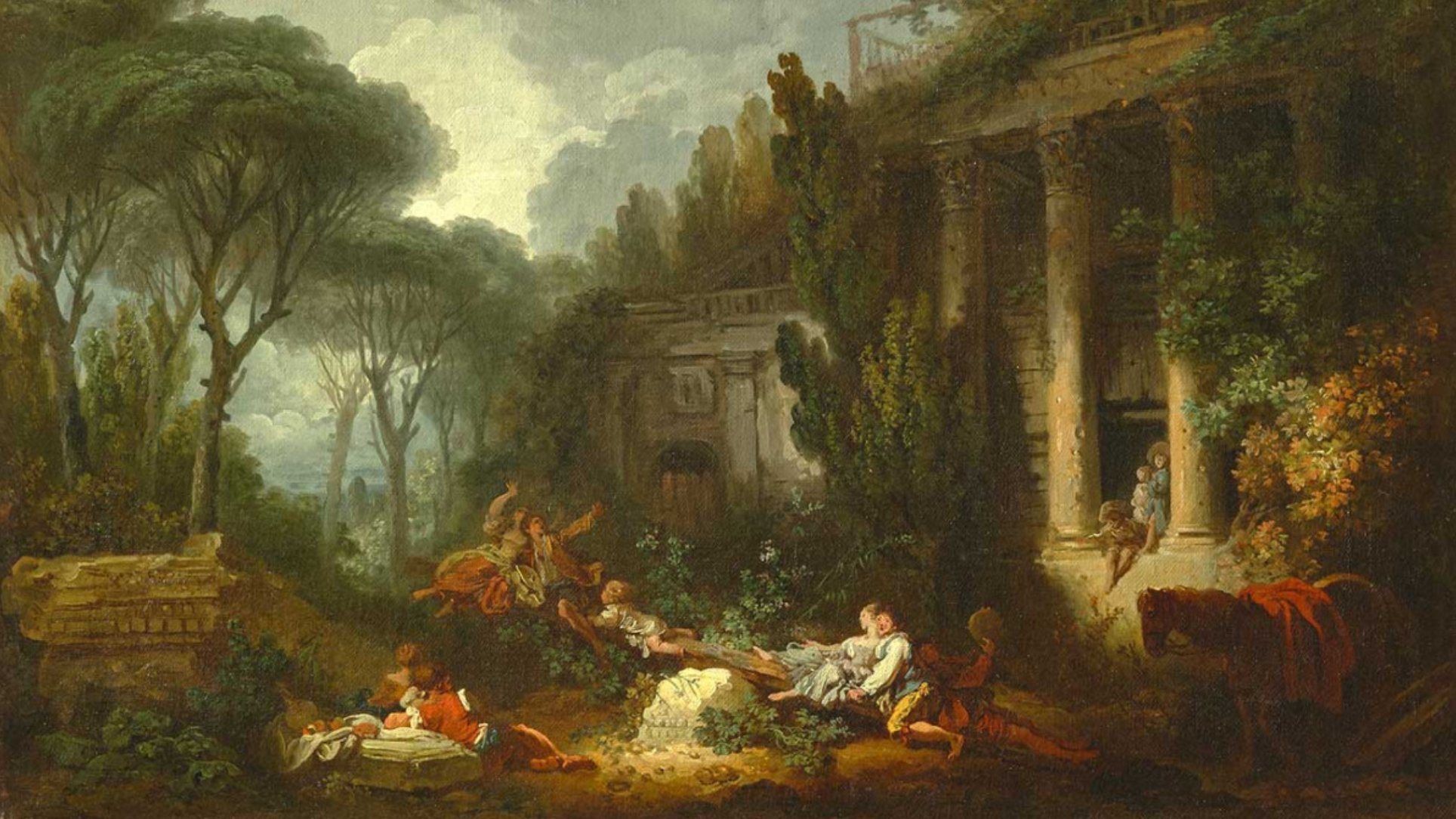
Fragonard (1732-1806), La Bascule, c. 1761 oil on canvas, 75 x 93 cm, photo: © Hervé Lewandowski
More information: Click here
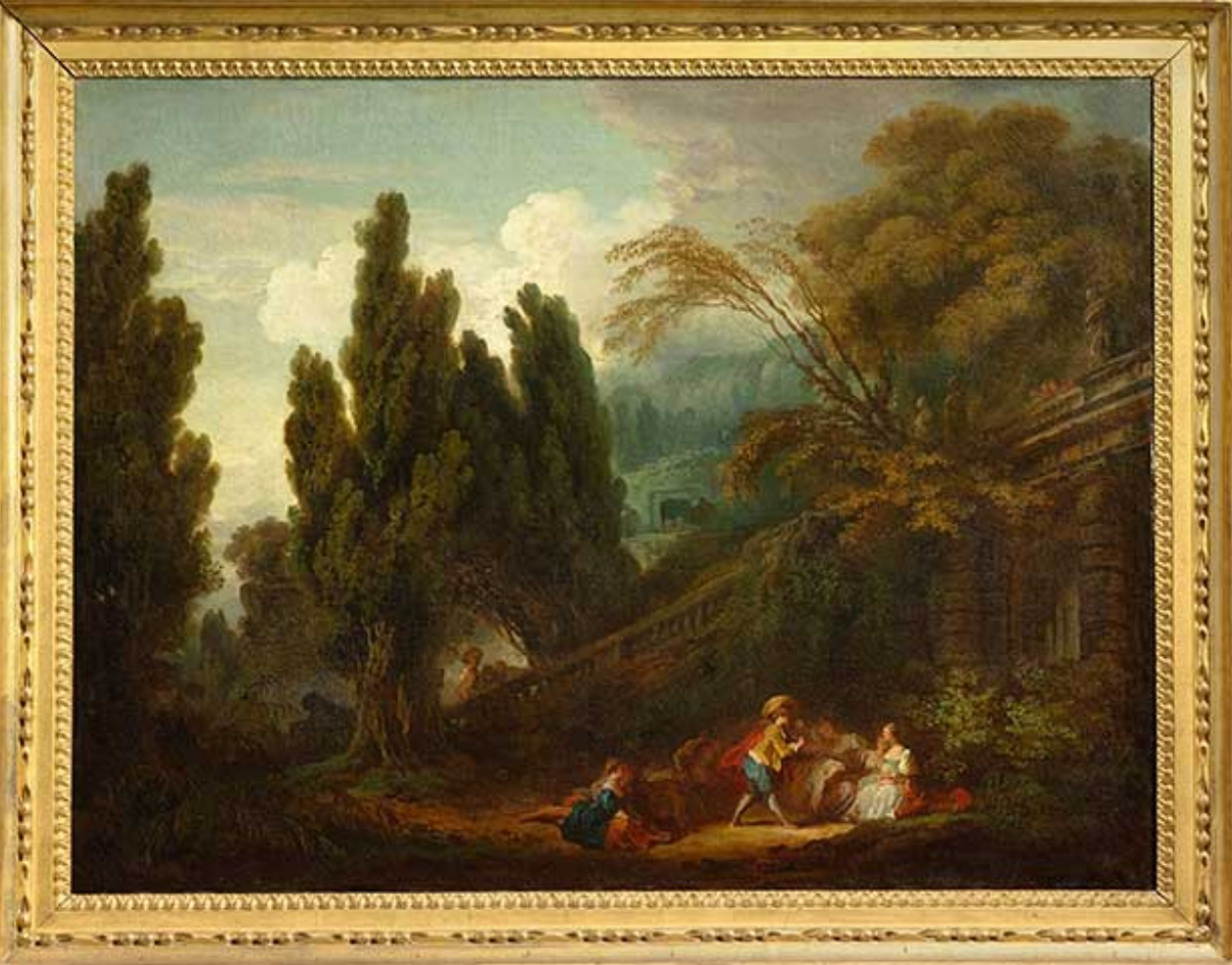
Fragonard (1732-1806), Le Jeu de la palette, c. 1761, oil on canvas, 75 x 93 cm, photo: © Hervé Lewandowski
More information: Click here